

After a car accident, your first priority is usually your health. You focus on the pain, the stress, and trying to return to your normal routine. While that is important, there is another step happening in the background that can shape your entire case, and that is how you record your car accident injury.
Many people believe that seeing a doctor is all they need to do. In reality, a strong legal injury claim depends on how clearly your situation is documented over time. Insurance companies do not rely on assumptions. They expect to see a complete picture made up of records, timelines, and supporting details. If those pieces are missing, they may start to question how serious your injury really is. This is why building a proper accident injury-proof from the start is so important.
Why Documentation Matters After a Car Accident Injury?
When your case is reviewed, everything depends on what can be shown and supported. Saying that you are injured is not enough on its own. If your records are incomplete or unclear, it can create uncertainty around your claim, even if your injury is genuine.
Clear documentation helps connect all the pieces together. It shows how the injury happened, what kind of treatment you needed, and how it has affected your everyday life. Over time, this creates strong injury case evidence that explains your situation in a way that is easy to understand and difficult to dispute.
What Counts as Proof of a Car Accident Injury?
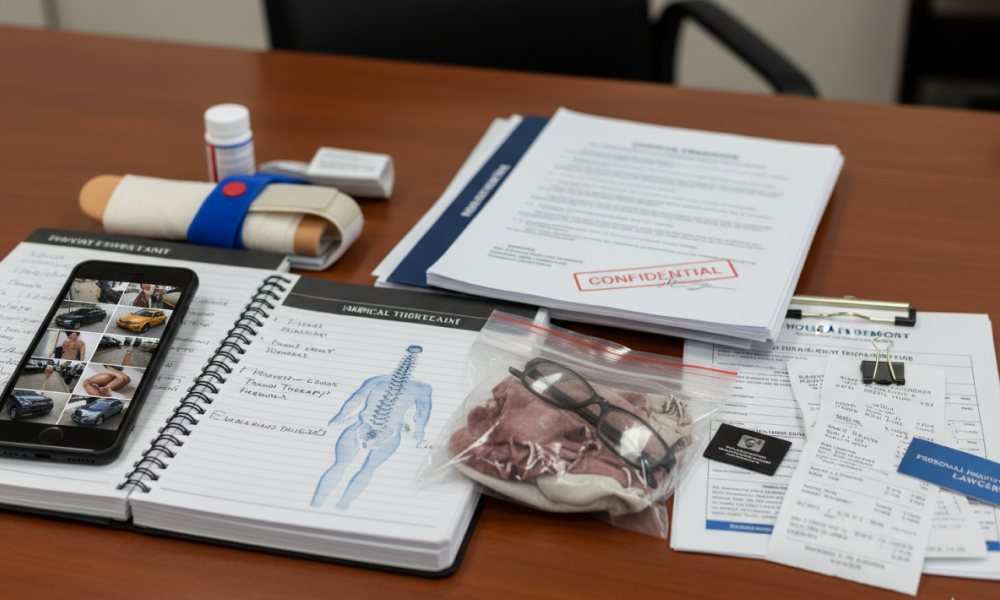
Understanding what qualifies as valid accident case proof is important before you start collecting documents. A well-supported claim usually includes a mix of medical, visual, and financial evidence that works together to tell a complete story.
Medical Records
Medical records are often the first thing people look at when reviewing your case. They give a clear, professional view of your condition from the very beginning. From the moment you get checked out, every report, prescription, and follow-up visit starts to build a timeline of your recovery.
These details, which fall under the claim medical documents, help show how your injury showed up and how it has been treated over time. When everything is written down properly, it becomes easier to connect your condition directly to the accident. Without these records, it can feel like something important is missing when trying to explain your car accident injury.
Photos and Physical Evidence
Sometimes, words are not enough to clearly explain what happened. Photos can help fill in those gaps by showing the situation as it really was. Right after the accident, try to capture images of your injuries, the vehicles involved, and the surrounding area. These details can make it easier for others to understand the impact without relying only on written descriptions.
It is also helpful to continue taking photos as your recovery progresses. This allows you to show how your condition changes over time instead of trying to recall everything later. Having this kind of visual accident injury proof makes your case more complete and easier to follow from beginning to end.
Expenses and Financial Loss
An injury does not just affect how you feel. Also, it can start to affect your daily life in other ways. Costs begin to add up, sometimes without you even noticing at first. Medical bills, therapy sessions, medications, and even time away from work can all take a toll.
Keeping track of these expenses as they come up helps you stay on top of things. It also makes sure you do not leave anything out later when your case is being reviewed. These records support your legal injury claim by showing the real impact of the accident, not just the physical side, but the financial side as well.
How to Document Car Accident Injuries for Legal Claims
Many people handling documentation on their own later realize that strong records are essential when dealing with car accident injury claims, especially when insurers start questioning the severity of injuries. Now let’s walk through the steps you should follow to properly document your injury and build a strong case.
Get Medical Treatment as Soon as Possible
Seeking immediate medical attention is one of the most important steps you can take. Even if your symptoms seem minor, it is still important to get checked by a professional. Some injuries take time to appear, and delaying treatment can create doubt later.
A clear medical timeline helps connect your car accident injury directly to the accident. It also strengthens your accident case proof and prevents insurance companies from questioning your claim.
Take Clear Photos of Injuries and the Accident Scene
As soon as possible, take photos of your injuries and the accident scene. Make sure to capture different angles and continue taking pictures during your recovery process. This helps document changes in your condition over time.
These images act as strong visual support and can significantly improve your accident injury proof, especially when combined with medical documentation.
Keep Copies of All Medical Reports and Prescriptions
Every visit to a doctor or hospital comes with important paperwork, and it is easy to overlook how valuable these records can be later. Instead of depending on memory, make it a habit to collect and keep everything in one place so nothing gets lost over time.
This can include your diagnosis reports, prescriptions, lab reports, and any follow-up notes. As these records build up, they start showing a clear picture of your treatment journey and recovery progress. These claim medical documents become strong injury case evidence that helps explain your condition in a detailed and reliable way.
Write Down Your Symptoms and Daily Pain
Medical records explain your injury, but they do not always reflect what you go through every day. That is why keeping a simple daily record can make a real difference. Take a few minutes to write about how you are feeling, what kind of pain you are experiencing, and what activities have become difficult.
You might notice small but important changes, like struggling to carry groceries, feeling discomfort while sitting, or having trouble sleeping through the night. These everyday details make your car accident injury easier to understand and show how it is affecting your normal life in a real and personal way.
Track Every Expense Related to Your Injury
When you are dealing with an injury, expenses can quietly build up without you even noticing. That is why it is important to keep a close record of every cost connected to your recovery. This includes things like medication, therapy sessions, and even travel expenses for doctor visits.
Keeping everything noted in one place makes it easier to see the full financial impact of your situation. These records give clear support to your legal injury claim and help make sure that none of your losses are missed or underestimated.
Save Police Reports and Witness Details
Police reports can play a key role in explaining what happened at the scene. They often include important details such as initial observations, involved parties, and how the incident was recorded. It is a good idea to request a copy as soon as it is available so you have it ready when needed.
In addition to that, witness statements can add another layer of support. People who saw the accident can help confirm your version of events, which strengthens your accident case proof and makes your situation more credible.
Keep All Communication with Insurance Companies
It is easy to forget details after multiple calls or emails, especially when everything feels rushed. That is why it helps to keep a proper record of every interaction you have with the insurance company. Whether it is a quick phone call or a detailed email, try to save or note it down so nothing slips through the cracks.
After each conversation, take a moment to write down what was discussed and any important points that were mentioned. This habit can help you stay clear about what has been said and avoid confusion later on. Having a record of these exchanges can also support your car accident injury claim if any questions or disagreements come up along the way.
Follow Your Treatment Plan Without Gaps
Your treatment plan is not just about getting better; it also shows how your recovery is unfolding over time. Every appointment you show up for, and every therapy session you go through,h helps build a clearer picture of what you are dealing with and how your body is responding along the way.
If you start skipping visits or drop off from your routine too soon, that flow can break. It may end up looking like your condition improved all of a sudden or was not affecting you as much, even if that is not true. Keeping up with your appointments helps keep your recovery story on track and easier to understand.
It also shows that you are taking your doctor’s advice seriously and putting in the effort to recover. When you stay consistent and follow through with your care, it adds more trust to your situation. Over time, this steady approach helps back up your case in a clearer and more convincing way, without leaving room for doubt.
Common Pitfalls to Avoid After a Car Accident Injury
It is not always the big mistakes that cause problems. In many cases, it is the small things that slip through unnoticed. Waiting too long to see a doctor, misplacing important records, or not following through with medical advice can slowly affect how your situation is viewed.
When you are trying to heal and manage everything at once, it is completely normal for details to slip. Still, these little gaps can create confusion and make your case look less clear than it actually is. That is why staying a bit more mindful of these steps can go a long way.
Keeping your records in order and staying steady with your care does not require perfection, just consistency. This approach helps your legal injury claim stay strong and makes sure your side of the story is supported from start to finish.

When to Talk to a Lawyer
Handling everything on your own can become difficult, especially if your injuries are serious or your case is being challenged. At this stage, many people start exploring car accident injury situations more closely to understand their legal options and get proper guidance.
A lawyer can help organize your records, identify missing accident case proof, and present your case more effectively. If you are dealing with a personal injury claim new york, working with an experienced legal team can make the process smoother and less stressful.
You can also consider reaching out to The Rochester Law Firm for guidance. Their experience in handling injury cases can help ensure your documentation is complete and properly structured.
Last Words
Documenting a car accident injury is more than just saving papers and reports. It is about putting together a clear and honest picture of what you have gone through, from the moment of the accident to your recovery. Every small detail you record helps explain your situation in a way that others can understand.
When you stay consistent with your records, keep track of how you are healing, and keep everything in order, your case naturally becomes more dependable. It gives you a sense of confidence because you know your situation is clearly backed up at every stage, without missing pieces.
If you ever feel unsure or start second-guessing whether you have done enough, getting the right guidance can really help. You can reach out to The Rochester Law Firm, known for its practical and detail-focused approach to injury cases, to understand your next steps and make sure your documentation is truly supporting your case.