
Ask ten different applicants how long does naturalization takes, and you’ll likely get ten different answers. Some people go from filing to oath ceremony in under a year, while others wait considerably longer depending on where they live, how busy their local field office is, and whether any complications pop up along the way. There’s no single answer that applies to everyone, but there is a realistic range you can plan around once you understand what actually drives the timeline.
This guide breaks down the naturalization process step by step, along with the factors that can speed things up or slow them down.
Breaking Down N-400 Processing Time
N-400 processing time varies significantly depending on the USCIS field office handling your case. As of recent data, average processing times have ranged from roughly 6 months to over a year at certain offices, with some cases moving faster and others facing extended delays due to backlogs or additional review requirements. Checking current processing times for your specific field office gives a far more accurate picture than relying on a national average.
How Long Does N-400 Take From Filing to Oath?
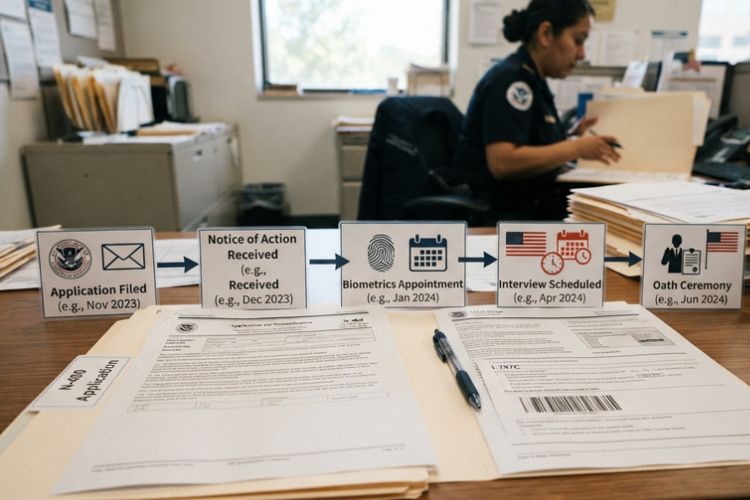
The journey involved in the process of becoming a citizen can be broken down into several stages such as filing and receiving notice, getting a biometric appointment, conducting citizenship interviews, and the oath ceremony. So, how long does the N-400 process take altogether? The majority of applicants can expect to wait anywhere from 8 to 18 months, although individual processing may take place more quickly or at a slower pace depending on the situation.
What Happens After You File the N-400
Once the application has been filed, USCIS will issue a receipt indicating that it has been received. This is generally done within weeks of filing. The next step is the biometric appointment that involves the applicant providing fingerprints and a photograph that will be used for a background check. The next step is receiving a notice for an interview, which will also include civics tests as well as an English test, unless a waiver is applied for.
Factors That Influence U.S. Citizenship Processing Time
There is no single answer to the question of what impacts citizenship processing time. Factors such as incompleteness of applications, missing documents, or pending matters like unpaid taxes and outstanding deportation cases can add delays of many months to the process. In principle, immigrants with simpler histories and fully completed applications will have their processes completed much more quickly than those who have complications.
Why Citizenship Application Processing Time Varies by Location
It is important to understand that citizenship processing time does differ from one state to another and one immigration office to another. Offices located in heavily populated areas such as New York City process significantly more cases than those located in towns with a small population. This basically means that, depending on the office one visits, two applicants with identical records may get very different processing results.
Step-by-Step: How Long Does It Take to Get U.S. Citizenship
Determining how long it takes to obtain US citizenship really comes down to understanding the various steps in the process. From the time of filing to receiving the receipt notice, the gap generally only takes a few weeks. Generally, most people can expect their biometrics appointment to take place in the month or two that follows. The longest gap in the entire process is usually waiting for an interview, which can take anywhere from six months to one year, depending on the field office. When the application is approved, the individual can expect to go to their oath ceremony in the following few weeks up to a couple of months time.
Common Delays That Extend the Timeline
Even though people submit even the best applications, delays can still occur. Background check problems, requests for additional information, rescheduling of interviews, and administrative processing in certain types of cases can all slow things down much more than anticipated. By responding as quickly and completely as possible to any request from USCIS, people can avoid a great deal of trouble down the road.
A Reminder That Legal Deadlines Matter Across Every Area of Life
Timing matters in more than just immigration cases. Just as naturalization applicants need to understand their own processing timeline, injury victims face their own countdown too. Our earlier guide on how long you have to file a personal injury claim covers a similarly important deadline that many people underestimate until it’s nearly too late. Whether it’s citizenship or compensation, understanding your timeline early gives you far more control over the outcome.
Getting Help From an Experienced Immigration Team
Navigating N-400 processing time and all the paperwork that comes with it is considerably easier with the right guidance. As the best immigration attorney Rochester Law Firm clients turn to will tell you, small errors on the application, like an inconsistent address history or an unreported minor offense, can trigger delays or even denials that could have been avoided with careful preparation from the start.
What If You’re Applying for Citizenship Through Marriage?
Applicants who qualify for naturalization through marriage to a U.S. citizen often follow a slightly different eligibility timeline, generally requiring three years of permanent residency instead of five. If your path to citizenship started with a marriage-based green card, working with a spousal visa attorney near NYC from the beginning can help ensure your documentation lines up correctly for both the green card process and the eventual naturalization application.
Setting Realistic Expectations
If an applicant knows how much time is needed for naturalization and N-400 processing time after the interview, they will know what to expect and plan their lives accordingly, including traveling, getting a passport, or simply dealing with the stress of prolonged waiting times. All in all, the whole process may seem to take a considerable time, but with the correct submission of the application, applicants’ N-400 processing will run smoothly enough.
Let Us Help You Navigate the Process

Every citizenship journey looks a little different, and understanding how long does naturalization takes for your specific situation starts with a careful review of your application and background. At The Rochester Law Firm, we help clients prepare thorough, accurate N-400 applications designed to move through the system as smoothly as possible. Reach out today to discuss your case and get a realistic timeline for your path to citizenship.
Frequently Asked Questions
How long does naturalization take on average in 2026?
When people ask how long does it takes to get U.S. citizenship these days, most applicants see a total timeline of eight months to a year and a half, though this varies by field office and individual case circumstances.
Can I travel internationally while my N-400 is pending?
Generally, yes, though extended trips abroad can raise questions about continuous residence, so it’s wise to keep any travel during this period relatively brief.
What happens if I fail the citizenship interview or test?
Applicants are usually given a second opportunity to retake the civics or English test within 60 to 90 days of the initial interview, rather than having to restart the entire application.
Does hiring an attorney speed up the naturalization process?
An attorney can’t control USCIS processing speeds directly, but thorough preparation and quick responses to requests for evidence can help avoid the delays that often come from incomplete or inconsistent applications.