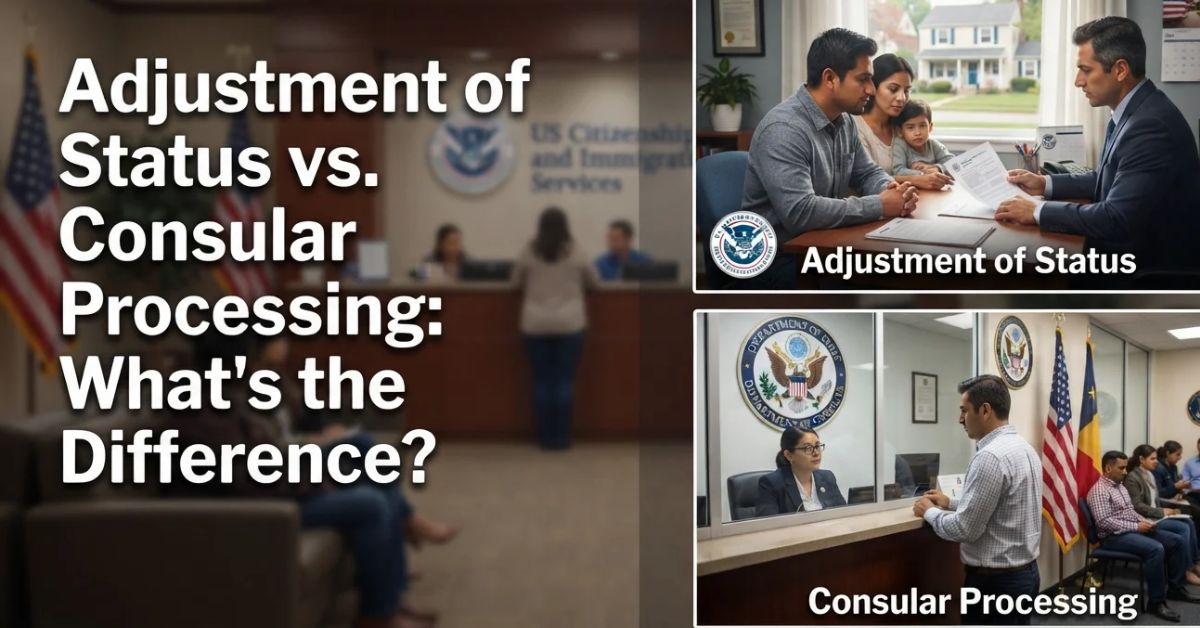

Choosing between adjustment of status vs. consular processing usually comes down to more than just eligibility. Once you know you qualify for either path, the real decision often hinges on two very practical questions: which one costs less, and which one gets you a green card faster. We’ve covered the eligibility side of this decision in our companion article on consular processing vs adjustment of status, but this guide takes a closer look at the numbers and timelines that actually shape most people’s final decision.
The Core Difference in One Sentence
Adjustment of status allows you to apply for your green card in the U.S. while your immigration status remains unchanged. Consular processing means you have to leave the U.S. to get your green card processed somewhere abroad.
Comparing the Filing Fees

For adjustment of status, you usually need to file Form I-485 along with the accompanying fees for the biometrics process and, in many cases, file the work and travel permit applications at the same time. Consular processing has its own fee structure and includes the immigrant visa application fee to the National Visa Center, review of the affidavit of support fee, and a separate medical examination done by the designated physician in the applicant’s country rather than in the U.S.
Neither path appears to be significantly cheaper as a whole, although consular processing can carry lower direct fees, while the adjustment of status process may add value in terms of work and travel permission.
Comparing Processing Times Side by Side
Time frames for processing applications change all the time due to various factors such as workload on the service center or the current visa type being processed, but overall trends can be observed. Processing of adjustment of status applications in busy field offices, like the ones that service the New York area, will require anywhere from eight months to over a year, from submission to interview. Processing of applications through consular processing is faster at the National Visa Center, and the interview appointment abroad may even be scheduled sooner than the domestic adjustment of status case if it is for a visa category not affected by backlogs.
Travel Restrictions: Advance Parole vs. Leaving for an Interview
This is where the difference between the two processes becomes most apparent. Unlike adjustment of status applicants, consular processing applicants need to leave the country to appear for their final visa interview, which poses a big risk for applicants who have a violation record, as leaving the US may bring a re-entry bar that does not apply to adjustment of status applications.
USCIS Adjustment of Status vs Consular Processing: Which Costs More Overall?
When you factor in incidental costs, like international travel, temporary housing abroad during processing, and potential lost wages from time away from work, the true cost comparison of USCIS adjustment of status vs consular processing shifts considerably; an applicant with a stable job and family in the U.S. may find adjustment of status far more cost-effective overall, even if the base government fees look similar on paper.
How Each Path Affects Your Status While You Wait
It is crucial to keep a lawful immigration status during this process, and the two options deal with this issue differently. Adjustment of status applicants need to hold a valid underlying status during the filing process, and pending cases usually offer certain protections against unlawful status. Conversely, consular processing applicants are not concerned with holding a certain type of status because their application is dealt with abroad all along.
Risk Factors: Unlawful Presence and Reentry Bars
Anyone who has spent some time in the U.S. unlawfully needs to consider this fact carefully when making the decision about going for consular processing. Leaving the country to attend a visa interview might cause one to be banned from reentering the U.S. for three or ten years depending on the amount of unlawful presence accrued, which does not concern a person adjusting their status. For this reason alone, many applicants have opted for the adjustment of status route even if consular processing might be faster.
Consular Processing vs Adjustment of Status: A Quick Cost and Time Snapshot
| Factor | Adjustment of Status | Consular Processing |
| Where it happens | Inside the U.S. | Abroad, at a consulate |
| Travel during processing | Possible with advance parole | Not applicable; interview requires travel |
| Reentry bar risk | Generally avoided | Possible if unlawful presence exists |
| Work authorization while pending | Often available | Not applicable |
| Typical added costs | Work/travel document fees | Travel, lodging, time away from work |
This side-by-side view of consular processing vs. adjustment of status makes it easier to see why the “cheaper” or “faster” option really depends on your personal circumstances rather than a fixed rule.
Working With the Rochester Law Firm PLLC Immigration Team
Every case carries its own mix of costs, risks, and timing pressures, which is exactly why a general answer rarely fits everyone. The Rochester Law Firm PLLC immigration team walks through both paths with clients individually, weighing filing fees against travel risk and current processing times before recommending a direction.
If You Need to Extend a Visa While You Wait
Sometimes the smartest move is neither adjustment of status nor immediate consular processing, but rather buying time first. An immigration lawyer for visa extension filings can help applicants maintain valid status while they finalize which green card path makes the most financial and practical sense for their situation.
Final Cost and Timeline Takeaways

When looking solely at cost and time efficiency, either adjustment of status or consular processing may give you a better outcome. Several factors contribute to your choice between these two options, such as your current immigration status, your willingness to travel, as well as the type of visa you need. The key is to calculate your own numbers rather than assume one option works out better because it was the case for others before you.
At The Rochester Law Firm, we help clients weigh both paths clearly, including cost, timeline, and risk, so the decision feels informed rather than rushed. If you’re trying to figure out which route makes financial sense for you, reach out for a consultation before you file.
Frequently Asked Questions
Is adjustment of status always cheaper than consular processing?
Not necessarily. Base government fees are fairly comparable, but consular processing often adds indirect costs like international travel and lost income that can make it more expensive overall for some applicants.
Which path is generally faster?
When comparing USCIS adjustment of status vs consular processing timelines directly, it really depends on the visa category and current backlogs at both USCIS field offices and the relevant consulate. Neither path is consistently faster across the board.
Can I switch from consular processing to adjustment of status partway through?
In limited situations, yes, though it depends on individual circumstances like current location and visa eligibility, so this should be discussed with an attorney before assuming it’s an option.
Does choosing consular processing always risk a reentry bar?
Only if you’ve accrued unlawful presence in the U.S. before leaving; applicants without unlawful presence generally don’t face this specific risk when choosing consular processing.