
Waiting for a decision on your immigration application can be stressful, especially when you receive an unexpected notice from U.S. Citizenship and Immigration Services (USCIS). Instead of an approval, the letter asks you to submit additional documents or clarify information you already provided.
This letter is called a Request for Evidence (RFE), but it doesn’t mean USCIS has denied your application. The officer needs some more documents or details before deciding your case. Understanding what happens after an RFE is issued by USCIS will help you know which documents to gather, when to send them, and what you can expect once USCIS receives your response.
Why USCIS May Ask for More Evidence
USCIS reviews immigration applications to determine whether applicants meet the requirements for the benefit they are requesting. Sometimes, the documents submitted with an application do not provide enough information for an officer to make that determination. In these situations, USCIS may issue a Request for Evidence.
Common reasons include:
- Missing civil documents: Birth certificates, marriage certificates, or other official records may be missing.
- Insufficient financial proof: A sponsor’s income documents may not establish the required financial support.
- Incomplete employment records: USCIS may need additional information about employment history, qualifications, or job responsibilities.
- Conflicting information: Details in the application may differ from those in supporting documents.
- Limited relationship evidence: Family-based petitions may require further proof of a qualifying relationship.
The reason for an RFE depends on the type of immigration application. For example, someone applying for a marriage-based green card may receive a request for additional relationship evidence, while an employment-based applicant may need to provide more information about their qualifications.
What Your RFE Notice Will Tell You

When USCIS sends you a Request for Evidence, the notice explains why the officer needs more information about your application. It identifies the requirements you haven’t fully addressed and tells you what additional documents or details USCIS wants to see before making a decision.
The letter may ask for missing records, updated financial documents, certified translations, or explanations about information you’ve already provided. Read each request carefully so you understand exactly what is missing. Sending documents that don’t address the officer’s questions may not help your case.
The notice also tells you where to send your response and when USCIS must receive it. Check whether you need to submit copies or original documents and follow the instructions provided. Keep a copy of the notice with your records so you can refer to it while preparing your response.
How Much Time Do You Have to Respond?
If you’re trying to understand what happens after RFE USCIS issues, checking your response deadline should be your first step. The notice will tell you when USCIS must receive your documents. Missing this date could affect your application, so make sure you have enough time to prepare your response.
Under applicable regulations, USCIS generally allows no more than 12 weeks for an RFE response, although you may receive less time. Your RFE response deadline depends on the instructions in your notice, so don’t assume you’ll have the same amount of time as another applicant.
Read the notice carefully to find out where and how to send your documents. If you need official records from another country or certified English translations, start collecting them early. This will give you time to arrange the paperwork and check everything before submitting your response.
Preparing Your Response Without Missing Important Details
Knowing how to respond to an RFE involves more than collecting documents. Your response should address each concern raised by USCIS and provide evidence that directly supports your eligibility for the immigration benefit.
Follow these steps when preparing your submission:
- Review the notice: Identify every issue USCIS has raised and compare it with the documents originally submitted.
- Collect supporting records: Gather the certificates, financial statements, employment records, or other evidence requested.
- Arrange translations: Provide complete certified English translations when submitting documents written in another language.
- Prepare an explanation: Include a cover letter that identifies the evidence and explains how it addresses the officer’s concerns.
- Submit the response: Follow the instructions in your notice, include the required notice or cover sheet, and retain proof of submission.
USCIS generally expects applicants to submit all requested evidence together. Sending documents separately may create problems because a partial response can be treated as a request for USCIS to decide the case using the available record.
What If You Cannot Provide a Requested Document?
Getting certain documents isn’t always easy, especially when they come from another country. You might not have access to your birth certificate, your previous employer may have shut down, or the government office responsible for keeping your records may no longer have them.
If you’re unable to get the original document, USCIS may accept other evidence, depending on the requirements of your case. For example, you might be able to provide another official record or a written statement from someone familiar with the situation. You’ll also need to explain why you couldn’t get the requested document and, where required, show what steps you took to obtain it.
The documents you need can also depend on where you’re applying from. If you’re comparing Adjustment of Status vs. Consular Processing, keep in mind that applying from within the United States and applying through a U.S. consulate abroad involve different procedures and may have different document requirements.
What Happens After USCIS Receives Your RFE Response?
After USCIS receives your RFE response, an immigration officer will go through the documents you’ve sent and compare them with your original application. If you’ve provided the information requested in the notice, USCIS can move forward with reviewing your case.
If the new documents provide enough proof that you meet the requirements, USCIS may approve your application. But if the officer still needs clarification, you could receive another request for documents. Your application may also be denied if the evidence doesn’t establish that you qualify.
You won’t necessarily hear back from USCIS right away after sending your response. Some applications take longer than others, depending on the type of case and how many applications the USCIS office is handling. While you’re waiting, you can use your receipt number to check your case status on the USCIS website.
Can USCIS Deny Your Application After an RFE?
Submitting additional documents does not guarantee that USCIS will approve your application. Understanding what happens if an RFE is denied starts with an important distinction: USCIS generally denies the underlying immigration application or petition, rather than denying the RFE itself.
A denial may occur when the response does not establish eligibility, requested evidence remains missing, or USCIS does not receive a timely response. Depending on the circumstances, an applicant may have options involving a motion, appeal, or new filing.
USCIS may also issue a Notice of Intent to Deny (NOID) in certain situations. Unlike an RFE, which seeks additional evidence, a NOID explains why USCIS intends to deny the application and provides an opportunity to respond before a final decision.
When an Immigration Attorney Can Help With an RFE
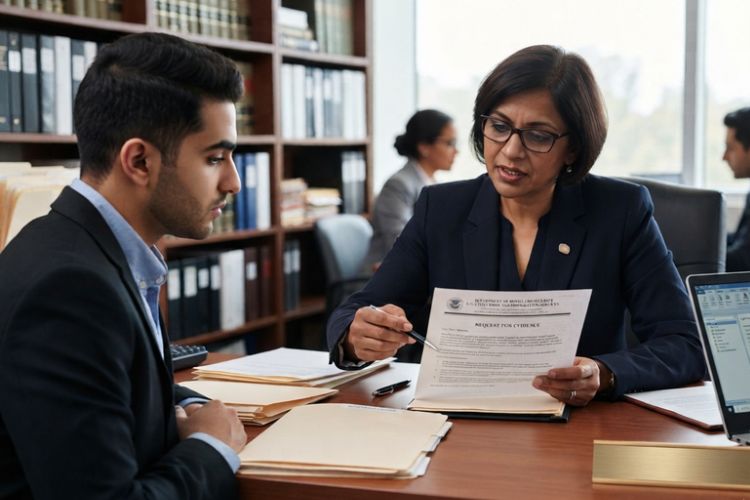
Some RFEs can be difficult to handle, especially when USCIS asks questions about your immigration history, income, employment, or documents you’ve already submitted. If you’re unsure what the officer needs, an immigration attorney can go through the notice with you, explain the concerns, and help you gather the documents needed for your response.
If you are searching for the best law firm in New York, consider the firm’s experience with your type of immigration matter and its approach to preparing evidence-based responses. The Rochester Law Firm provides immigration legal services and can help clients understand the issues raised in their USCIS notices.
Conclusion
Receiving an RFE doesn’t mean your immigration application will be denied. USCIS simply needs more information before making a decision. That’s why it’s important to understand how to respond to an RFE, gather the right documents, and make sure everything reaches USCIS before the deadline.
If you’re unsure about the documents USCIS has requested or how to address certain concerns, speaking with an immigration attorney may help. The Rochester Law Firm can review your RFE notice, explain what USCIS is asking for, and help you prepare a response based on your case.
FAQs
Does receiving an RFE mean my immigration application will be denied?
No, an RFE doesn’t mean USCIS has decided to deny your application. It means the officer needs more information before making a final decision. Your application may still be approved if the additional documents show that you meet the requirements.
Can I check my USCIS case status after submitting an RFE response?
Yes, you can check your application status on the USCIS website using your receipt number. Keep a copy of your delivery confirmation as well, since it may take some time for USCIS to update your case status after receiving your documents.
How long does USCIS take to make a decision after an RFE response?
Applicants asking what happens after an RFE and USCIS processing resumes should know that there is no fixed decision timeline. Some cases move forward relatively quickly, while others require additional review depending on the application and USCIS workload.
Can USCIS send another RFE after I respond to the first one?
Yes. USCIS may issue another request if additional information is necessary. However, applicants should not rely on receiving another opportunity to provide missing documents. A complete and timely response to the first notice is important.